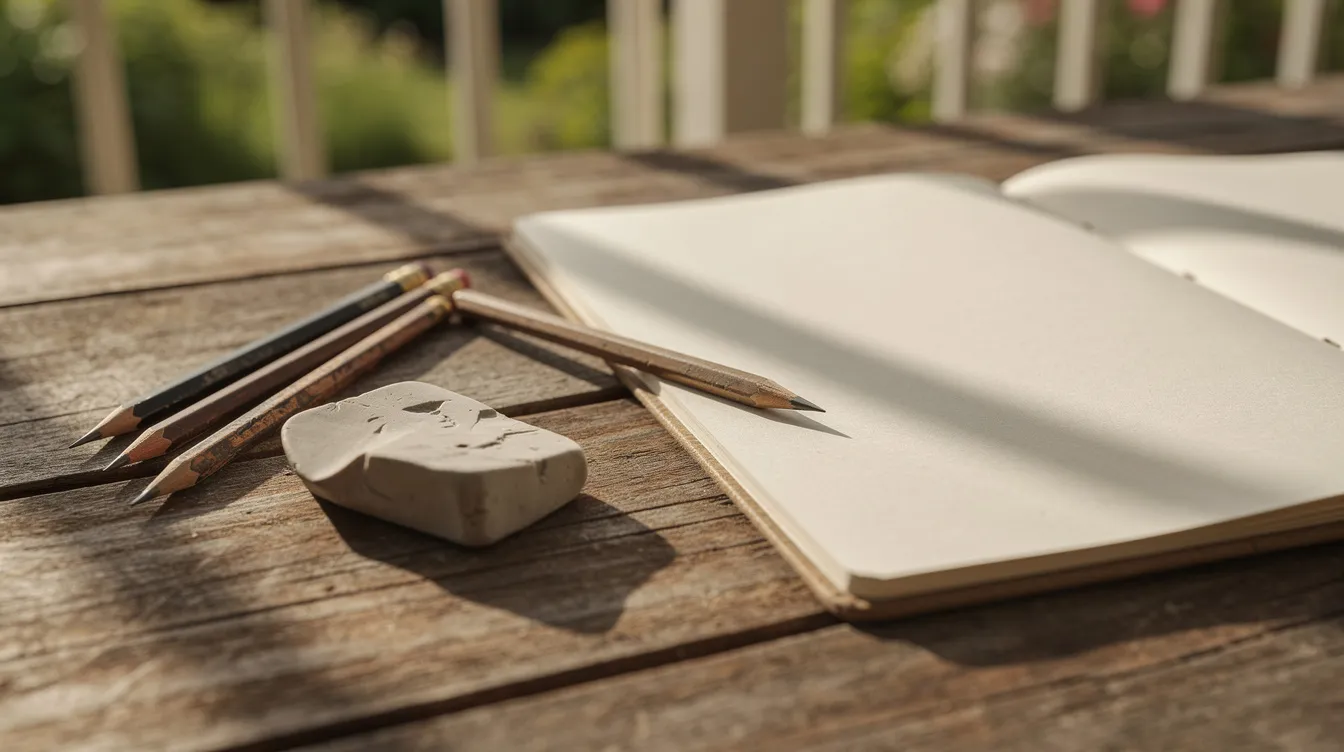

I started pencil drawing in my early 60s, on the back verandah in Brisbane, and I have been at it most afternoons since. This is what I have learned about where to begin. If you are still wondering whether it is too late for you, I have written a separate piece on is it too late to learn to draw.
Why Pencil Drawing Is Such A Good Way To Start (Especially In Retirement)
I am a mum of three grown-up kids and a nan to five, and I am writing as an ordinary person, not an art teacher. When I say “pencil drawing to draw,” I mean using simple graphite pencils as the easiest way into sketching anything you like. You do not need to be naturally talented, good at maths, or able to recite the rules of perspective. Sketching is the foundational skill for any artist, and pencil drawing can develop observation, creativity, and shading skills at any age. Simple drawings help beginners improve their sketching skills without pressure.
Pencil suits older eyes and hands because it is cheap, erasable, quiet, and there is no mess. You can put it down when the phone rings or you feel like a nap, and pick it up again twenty minutes later. This is my own hobby experience on Drawing in Retirement, not a sales pitch for classes or materials. Focus on a few simple concepts to avoid overwhelm and you will find the whole thing more fun than you expected.
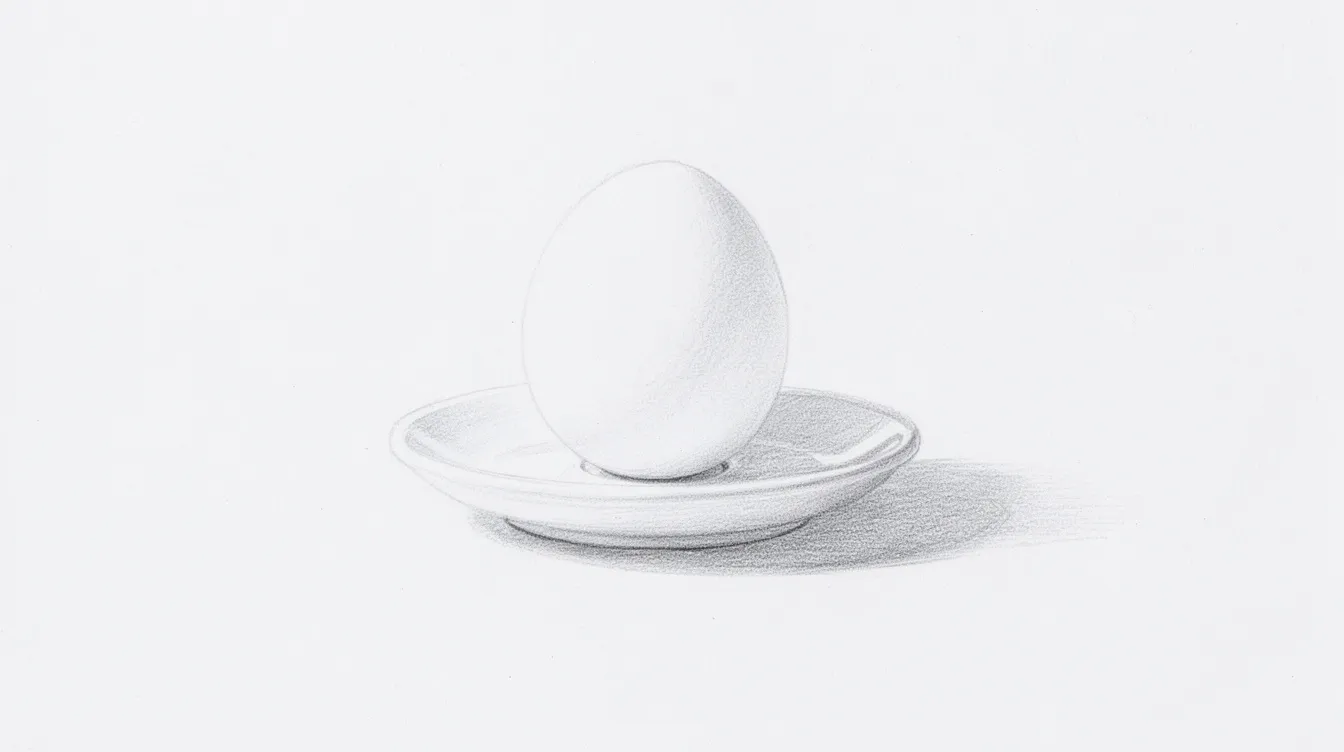
My first mistake was trying a portrait of one of my grandchildren. I got cross and started to rub at the paper until I wore a hole clean through it. The better first drawing, I learned later, is a single simple object in soft light: an egg, an apple, a mug. If you wonder whether you have left it too late to begin, the short answer is no. I have written separately about starting to draw as an adult, and the evidence is clear that our brains keep learning well into later life.
Simple Pencil Drawing Materials That Truly Are Enough
When I started around 2018, I wasted a lot of money on fancy supplies. Here is what I actually reach for most afternoons now.
-
Pencils. A 2B pencil and paper are essential for easy drawings. I use a 2B for most of my work and an HB for a lighter first sketch. If I want deeper darks I pick up a 4B. Graphite grades are determined by pencil hardness and darkness. Pencils come in hard (H) and soft (B) leads for different marks: H pencils have harder lead for light, clean lines, while B pencils have softer lead for rich shadows and shading. Soft leads create darker marks while hard leads create lighter ones. If you want to see the full H to B grading scale chart, the Wikipedia entry on pencils lays it out clearly.
-
Mechanical pencil. Mechanical pencils with 2B lead save time on sharpening. If your fingers are stiff or arthritic, the wider barrel is easier to grip and there is no fussing with a sharpener.
-
Erasers. A white plastic block eraser for big corrections, and a kneadable eraser squeezed to a point for lifting graphite in delicate areas. Using a kneaded eraser can gently lift highlights without damaging the paper, and kneadable erasers allow for precise corrections without residue.
-
Paper and comfort. Photocopy paper for rough sketches, and a slightly smoother A4 sketchbook for drawings I want to keep. Easy pencil drawings can be created with minimal tools. I also keep a table lamp near my drawing hand so I can see the surface properly, a pencil grip for days when my hand aches, and a cushion behind my back. I take a short break every half hour or so. My beginner art supplies list covers everything in one place if you want to keep the spending sensible. For a plainer rundown of what to buy first, that is the one to read next.
First Pencil Drawings To Draw When You Feel Like You “Can’t Draw”
My first pencil drawings in 2018 were tiny everyday things on my kitchen table, not faces or complicated scenes. A single object is easier because there is one shape, one light source and one shadow, so if it goes wrong you can notice why.
Still life is a classic starting point for drawing practice. Here are subjects most people have at home and that are suitable for a first attempt: a teaspoon, a mug with a clear rim and handle, one lemon or apple, an egg on a saucer, reading glasses, a houseplant leaf, a TV remote. Easy pencil drawings often include simple shapes like flowers, too, if you have any on the table. Each of these has clear lines and edges. Practicing basic shapes helps in learning highlights and shadows, and simplifying subjects into basic geometric forms aids in drawing accuracy. Choosing the right subject helps target specific techniques like value scaling and texture.
Start small. Each drawing can be the size of a playing card. Place the object near a window or one lamp so there is a bright side, a darker side, and a shadow on the table. Then draw the same object on three different days instead of chasing something new. Copying easy drawings boosts confidence in new artists, and practice drawing simple subjects before moving to complex ones. My first egg looked like a potato that had been sat on, but the sheets side by side showed real progress. A drawing does not have to be finished or perfectly shaded to count as practice.
Basic Pencil Drawing Techniques I Use Most Afternoons
I only use a handful of methods, and you can draw a surprising amount with lines, light shading and smudging. Observational skills are vital in drawing, so the main tip is to look at the object more than the page.
-
Line drawing. Use light, repeated, overlapping strokes instead of one heavy “perfect” line. This technique is kinder to unsteady hands and easier to erase if the outline goes astray.
-
Hatching. Hatching involves placing lines close together for shading. I run them all leaning the same way to create a shadow on one side of a mug or under a chin. Using soft leads creates darker marks for detailed work in these areas.
-
Cross-hatching. Cross-hatching adds depth by intersecting lines in different directions. I lay a second set of strokes across the first to darken the shadow under a teapot or a folded towel. I suggest learning plain hatching before blending because it teaches pressure control.
-
Blending. A blending stump or tissue helps achieve smooth transitions in shading, and feathering blends graphite for smooth shading effects. A cotton bud works too, and it is easier on my wrist than making endless tiny strokes.
-
Pressure and value. Test your pencil on the edge of the page, pressing from whisper-light to firm. The value scale helps practice shading from pure white to the darkest black. Building values gradually across multiple light layers develops shading. Avoid pressing too hard when starting to build darker tones gradually. Mark the brightest spot, the darkest part and the cast shadow first so everything does not end up the same grey. Leave the highlight as white paper, and shade the cast shadow darkest where the object touches the table so it sits rather than floats.
Practicing Regularly Without Turning Yourself Into Your Own Strict Art Teacher
For the first year I copied strict routines from online tutorials, then relaxed into a gentler pattern that suits retirement life. Practicing simple drawings can lead to complex skills over time, so there is no need to run yourself ragged.
-
Weekly rhythm. Three short sessions, say Monday, Wednesday and Friday afternoons, is enough. Daily practice can significantly improve your drawing skills, but a few sessions a week will still show progress if each one has a little structure.
-
Session shape. Spend 5 minutes on loose lines and circles as a warm-up, or fill a value strip of five boxes from near-white to dark. Ten minutes on a value strip makes the rest of the afternoon go better. Then 10 to 20 minutes on one small object or a corner of the room.
-
Track and explore. Date every drawing in the corner so progress shows quietly over weeks. Daily or monthly prompts can help build consistent drawing habits, so set tiny themes like “kitchen week” or “things on my bedside table.” Consistent drawing helps push your creative boundaries without you even noticing.
-
Avoid comparison. Watching younger artists online can make you feel behind. Our goal is enjoyment, focus and calm, not a diploma. Compare your own work from week one with week four and you will see the improvement for yourself.
What To Draw Next: Building Confidence With Simple Pencil Art Projects
Once the first nerves settled, I began small pencil art projects lasting a week or a month, and they helped me stick with it. Experience with different subjects can develop diverse drawing skills.
-
One object, many angles. Draw the same teacup or pot plant from the head-on view, the side, and from above over several days. Then add a second object, such as an egg and a lemon or a mug and a spoon, to see how shapes overlap and shadows meet.
-
Family memories. Use old printed photos to create simple pencil drawings of a 1970s holiday caravan, a childhood house, or a favourite pet. Animals and buildings from memory link your story to your sketchbook in a way no painting tutorial can.
-
Verandah or window view. Repeatedly sketch the same outdoor scene. Landscapes teach depth creation on paper and managing scale differences, and nature offers a variety of organic patterns that sharpen observation skills. Simplify trees and roofs into basic shapes.
-
Monthly list. Write a small “pencil drawing to draw” list in the front of your book for the month, so there is always a next idea waiting. Save flowers, detailed buildings and faces until your shading habits are steady. Portrait drawing tests understanding of anatomy and proportions, and eye studies help improve shading and texture skills, so they will still be there next month when you are ready.
End your list, not your drawing life. You are a person who draws now, not a student waiting for a sign of permission from the world. It is perfectly fine to stay with pencil for years if you enjoy it. I have, and I have no plans to stop.

FAQ
Which pencil should I use for my first drawing? A 2B is a good all-round choice. Add an HB for light outlines if you want two. That is all you need to start.
How long should a first drawing take? About 30 to 45 minutes for something like an egg or apple. Two shorter sittings with a cup of tea in between works too, and helps you learn to see the object with fresh eyes.
Should I use a ruler or trace to get the shape right? I would not. Freehand trains your eye, and a ruler is more useful later for boxes and buildings.
My shading looks patchy. What am I doing wrong? Usually pressing too hard too early and changing stroke direction. Use light layers, keep your lines going the same way, and keep your pencil sharp at the tip.
Do I need to draw every day? No. A few sessions a week is enough, as long as you enjoy it and keep coming back. Making it a chore is the fastest way to stop.